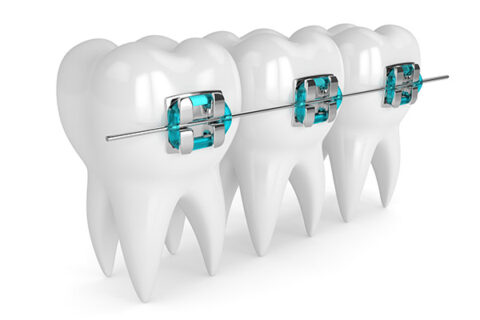
An orthodontist fills a critical role when crooked teeth, bite dysfunctions, and other issues affect your smile. If you are unhappy with the way your teeth work, braces might be the right option. Having crowded teeth is another condition that you may struggle with. This can have both cosmetic and health implications. You can find success in overcoming this problem by wearing braces. Your dentist can explain to you how this treatment works and what you can expect from it.
Causes of crowded teeth
When a person’s teeth do not fit properly or comfortably in their jaw, it presents a condition called crowded teeth. This can happen due to one of several factors. Some people are born with a smaller jaw, which does not allow for all the incoming teeth to fit well. A person may also have unusually large teeth, so they will grow in behind one another. Thumb-sucking as a toddler can also be a cause for crowded teeth. When a person loses baby teeth too early, it can lead to crowding issues in the mouth.
An overview of braces
For decades, patients have gone to an orthodontist with misaligned teeth and crowded teeth. Braces have long been a common treatment. Traditionally, braces consist of metal brackets and wires, along with elastic hands. The patient typically wears braces for two to three years. More recently, orthodontists have used ceramic instead of metal for braces. These are less noticeable in the mouth and are often preferable to patients.
Preparatory work
The orthodontist will first discuss the treatment with the patient and caregivers when applicable. During this consultation, the dentist will make sure the patient understands the process. The patient should address concerns and ask questions at this time. The orthodontist will then take X-rays of the mouth and make impressions of the patient’s teeth. This enables the team to make the right treatment plan. It may be necessary to remove one or more teeth to create space in the mouth.
Placing the braces
At a following appointment, the orthodontist will place the brackets and wires around and to the teeth. The elastics secure these in place. Using dental cement, the orthodontist will fix the brackets to the teeth. Wires go between the brackets. These put pressure on the teeth to move them into the proper places. Every few weeks, the patient will go into the office to have the elastics tightened.
The time factor
Every patient is different and has unique needs. The severity of the crowded teeth will determine how long the person wears the braces. The orthodontist will closely monitor how effectively the teeth are moving and creating enough room in the mouth. Most patients will wear braces for at least two years. Once the treatment ends, the person will likely wear a retainer to keep the teeth in place.
Call your orthodontist today
If you or your child is struggling with overcrowding in the mouth, help is available. You no longer have to be in pain or struggle with your smile. By wearing braces, you can make enough space for all your teeth. Make an appointment today to start your treatment.
Request an appointment or call Mile Square Orthodontics at 201-537-3535 for an appointment in our Hoboken office.
Related Posts
You can enjoy Halloween with braces. Choose soft, plain chocolate and treats that melt easily, and skip anything hard, sticky, chewy, or crunchy, like caramels, taffy, gummies, hard candy, gum, and popcorn. Brush soon after, and call us if a bracket loosens.October is a big month for orthodontic patients. The American Association of Orthodontists marks…
Ceramic and metal braces move teeth the same way, with brackets and a wire. The difference is appearance and durability. Ceramic braces use tooth-colored brackets that are harder to notice, while metal braces are stronger and often the better fit for severe or complex cases. The right choice depends on your bite, goals and lifestyle.…
Yes, you can play sports with braces. Low-contact activities like running, swimming and dancing are safe at every stage of treatment. For contact sports and sports involving a ball, wear a mouthguard designed to fit around braces. It protects the teeth, lips and cheeks, and keeps brackets and wires from breaking or bending. Fall is…