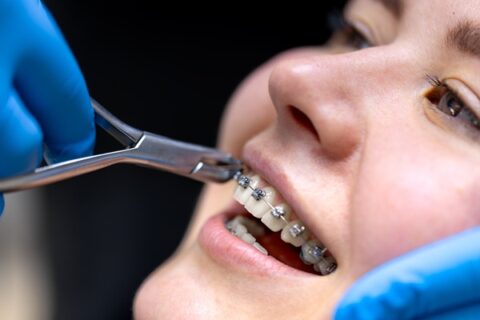
Ceramic vs. Metal Braces: How to Choose the Right Braces for You
Ceramic and metal braces move teeth the same way, with brackets and a wire. The difference is appearance and durability. Ceramic braces use tooth-colored brackets that are harder to notice, while metal braces are stronger and often the better fit for severe or complex cases. The right choice depends on your bite, goals and lifestyle.
When patients ask about clear braces, they usually mean ceramic braces. They are one of several types of braces patients can choose, along with traditional metal braces, lingual braces that sit behind the teeth, and clear aligners. Here is how ceramic and metal braces compare, and what we consider before recommending one.
What Are Ceramic Braces and Metal Braces?
Ceramic Braces
Ceramic braces are tooth-colored or clear braces made of ceramic material. The brackets blend in with the natural color of the teeth for a more inconspicuous appearance, which makes them a popular choice for teens and adults who want braces that are less noticeable in photos and at work.
Metal Braces
Traditional metal braces remain the most durable teeth-straightening treatment available. They are also far less bulky than the braces many parents remember, thanks to advancements in dental technology. Metal braces let patients choose the colors of the small bands that hold the wire, which many kids and teens enjoy changing.
Where Lingual Braces Fit In
Patients who want hidden braces sometimes ask about lingual braces as well. Like ceramic and metal braces, they use brackets and wires, but they are fixed to the tongue side of the teeth, so they sit behind the teeth instead of in front. Like ceramic braces, lingual braces are generally more suited to mild to moderate cases, and we can explain at a consultation whether they make sense for your bite.
How Do Ceramic and Metal Braces Work?
Both types work the same way. A bracket is bonded to each tooth, and a thin archwire runs through the brackets. At regular adjustment visits, about every four to eight weeks, we replace wires and tighten the braces as needed to guide the teeth into position. Because the mechanics are the same, the choice between ceramic and metal is mostly about how the braces look, how much wear they can handle, and how much care they need.
How Do Ceramic and Metal Braces Compare Side by Side?
The table below summarizes the differences we discuss at a consultation. It is a starting point, since your diagnosis decides which option will work best.
| Ceramic braces | Metal braces | |
|---|---|---|
| Appearance | Tooth-colored or clear brackets that are less noticeable | More visible, though smaller than older braces |
| How they move teeth | Brackets and wire | Brackets and wire |
| Durability | Less durable; extra caution needed | The most durable option |
| Bracket size | Larger brackets | Smaller brackets |
| Best suited for | Mild to moderate cases | All cases, including severe or complex ones |
| Cleaning | Harder to clean around larger brackets | Thorough hygiene still required |
| Food and drink | Avoid hard and sticky foods, plus dark beverages that can stain the lighter brackets | Avoid hard and sticky foods |
| Personal style | Blends in | Colored bands can be changed at visits |
Who Is a Good Candidate for Ceramic Braces?
Mild to Moderate Cases
Ceramic and lingual braces are generally more suited for mild to moderate orthodontic issues, such as some crowding or spacing. Traditional metal braces are often the only option for severe orthodontic issues, where the teeth and bite need more significant correction and the braces need to stand up to more force.
Patients Who Can Take Extra Care
Ceramic braces ask a little more of the patient. The brackets are less durable than metal, so patients need to be careful with hard foods and should never use their teeth as a tool. Adults weighing their options can learn more about adult braces and how treatment fits a busy schedule.
What Happens When Ceramic or Metal Braces Go On?
Getting Your Braces Placed
The process is the same for both types. It begins with a consultation, where we examine the mouth and take full X-rays, then take an impression or a 3D scan to plan the individualized braces. The braces are typically ready within two to three weeks.
At the placement visit, we clean and dry the teeth, bond a bracket to each tooth, and connect the brackets with a wire. The wire is held in place by small bands, and patients with metal braces can select the colors of those bands. The entire process takes about two hours.
The First Few Days
The first few days can bring slight discomfort, because braces start working right away and the gums may feel sore as the teeth begin to move. Rinsing with warm salt water and taking a pain reliever can help, and orthodontic wax can cover any bracket that rubs the cheek. Soft foods make eating easier while you adjust. This adjustment period is the same whether you choose ceramic or metal.
What Does Daily Care Look Like for Each?
Cleaning Around the Brackets
Every braces patient should brush at least twice a day and after every meal and snack, and floss by threading it between the wire and the teeth. Patients with ceramic braces should take extra care because the brackets are larger. That makes them harder to clean and can lead to swollen gums if the toothbrush does not reach the gumline. A tree brush and a water flosser can both help.
Food, Drinks and Sports
All braces patients should avoid sticky, hard, chewy and crunchy foods. Patients with ceramic braces should also avoid dark beverages, which can stain the lighter brackets. During contact sports or sports involving a ball, everyone in braces should wear a mouthguard, and ceramic patients should be especially careful since their brackets are less durable. Our life with braces page has more everyday tips.
How Do You Decide Between Ceramic and Metal Braces?
The first step is an accurate diagnosis. At your consultation, we examine your teeth and bite, take X-rays and an impression or 3D scan, and talk through your goals. If your case is mild to moderate and appearance matters most, ceramic braces may be a good fit. If your case is complex, or you want the most durable option, metal braces are often the better choice. We also explain how braces compare with clear aligners, which we cover in Invisalign vs. traditional braces, so you can see every option side by side. Cost depends on the type of appliance, your case and your insurance plan, so we review that with you, too. Every insurance plan is different, so we also encourage patients to contact their insurance provider for coverage information.
Frequently Asked Questions
Do ceramic braces take longer than metal braces?
Both move teeth with brackets and a wire. Treatment time depends mostly on your case. The average time with traditional braces ranges from 18 to 24 months, and more difficult problems can take up to three years.
Are ceramic braces completely invisible?
No. They blend in with the teeth and are much less noticeable than metal, but they are not invisible. Patients who want the most discreet option often compare them with clear aligners.
Will ceramic braces stain my teeth?
Braces do not stain teeth. Plaque that builds up in hard-to-reach areas can cause discoloration, so brushing and flossing carefully matters with either type.
Can I switch from metal to ceramic braces during treatment?
Ask our team. The right appliance depends on your case and where you are in treatment.
Find the Right Braces for Your Smile — Mile Square Orthodontics
Dr. Carly Kinzer is a board-certified orthodontist who treats children, teens and adults at our office at 1427 Grand Street in Hoboken. Our team is happy to discuss the types of dental braces we offer and determine which fits your smile. Call us at (201) 537-3535, book online, or start with a free smile assessment.