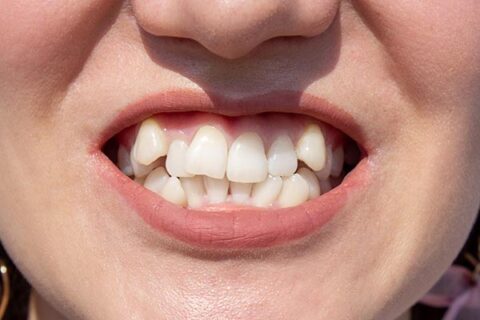
Are you thinking of visiting an orthodontist to treat your smile? There are various problems that can hamper your appearance and make you feel embarrassed. If you have crowded teeth, you may want to know what is causing this issue. An orthodontic professional can help resolve any concerns you have and give you the information you need. Then you can decide on treatment knowing you have made the right decision.
How crowded teeth can affect a person’s health
Having a crowded mouth full of teeth can do more than making a smile unappealing. There are impacts on the person’s oral health as well. Crowded teeth are more difficult to brush and floss. As a result, gum disease and tooth decay can develop.
This condition can also put pressure on the jaw and joints in the jaw. The individual may also have headaches. Teeth can become worn-down as well. This can affect the person’s ability to chew.
Having a small jaw
Often, having crowded teeth is unavoidable for the patient. Genetics can play a role. A person may be born with a small jaw that will not be large enough to accommodate all the teeth that erupt. In this situation, the teeth that come in will overlap. They also may twist and become severely misaligned. An orthodontist may correct this problem.
Losing teeth too quickly
Teeth typically fall out on schedule, one by one by a certain age in the person’s life. If baby teeth fall out too soon, there may not be enough room for the permanent teeth that come in. When teeth fall out at the right time, the permanent teeth should come in their place shortly after. However, when a baby tooth falls out too soon before the permanent teeth are ready, the other baby teeth may start to drift to fill the spots. Then, by the time the permanent teeth start to erupt, there will be little space for them to come in.
Abnormally large teeth
An orthodontist may treat a person who has larger-than-normal teeth. The bigger teeth will not fit well into the jaw. This can cut down on the available space for all the teeth. In this situation, some teeth may grow in behind others.
Thumb-sucking
Sometimes, an orthodontist may treat crowded teeth over issues that began during the patient’s toddler years. Thumb-sucking is common among small children, and it can have adverse effects on oral health. Over time, the teeth may begin to move. This causes misalignments and twisting of the teeth. The effects can be not having enough space for other teeth to erupt.
An orthodontist has the knowledge and training to help
Having crowded teeth can be common in young and older patients. If you are struggling with this condition, you need to talk to an orthodontist today. You can change your smile, relieve pain and discomfort, and improve your health. You no longer have to live with this problem. Make an appointment today so that you can get started on your treatment.
Request an appointment or call Mile Square Orthodontics at 201-537-3535 for an appointment in our Hoboken office.
Related Posts
You can enjoy Halloween with braces. Choose soft, plain chocolate and treats that melt easily, and skip anything hard, sticky, chewy, or crunchy, like caramels, taffy, gummies, hard candy, gum, and popcorn. Brush soon after, and call us if a bracket loosens.October is a big month for orthodontic patients. The American Association of Orthodontists marks…
Ceramic and metal braces move teeth the same way, with brackets and a wire. The difference is appearance and durability. Ceramic braces use tooth-colored brackets that are harder to notice, while metal braces are stronger and often the better fit for severe or complex cases. The right choice depends on your bite, goals and lifestyle.…
Yes, you can play sports with braces. Low-contact activities like running, swimming and dancing are safe at every stage of treatment. For contact sports and sports involving a ball, wear a mouthguard designed to fit around braces. It protects the teeth, lips and cheeks, and keeps brackets and wires from breaking or bending. Fall is…